Ronaldo chooses to stay with Portugal, but national team questions his place
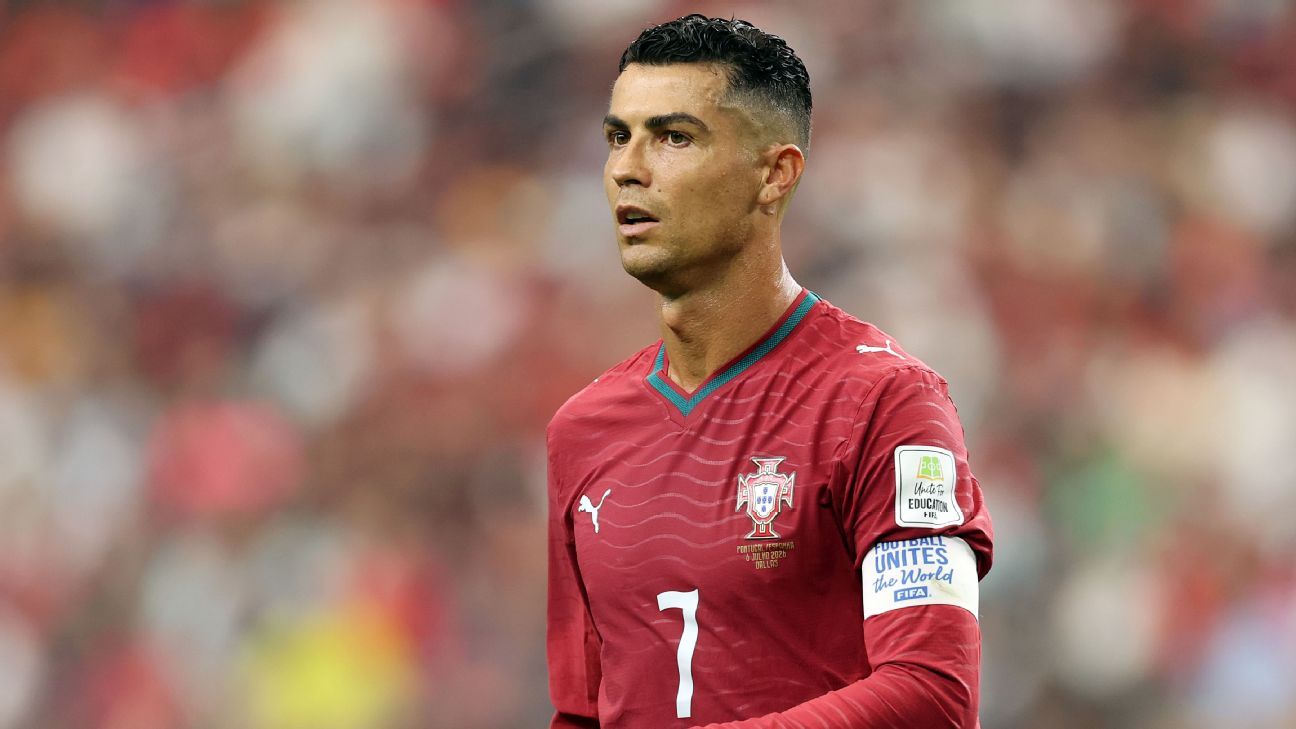
Photo: ESPN.com
Cristiano Ronaldo approaches his 234th international appearance against Wales in Lisbon, a personal milestone that reinforces him as an unmissable symbol of the Portuguese national team. Jorge Jesus has confirmed him as a starter in the Nations League, but the reality awaiting him is more complex than simple recognition of numbers. Ronaldo denies obsession with the thousand-goal mark, but admits his desire to reach it with Portugal — a detail that reveals the tension between an athlete's self-perception of still being capable and the doubts growing around him.
What happened
Ronaldo faced the question of international retirement after the World Cup and chose to continue. The statement comes in the context of a match at José Alvalade Stadium, precisely the first club where he played in Portugal, lending the moment an obvious symbolic weight. He has 979 goals in his career and will turn 42 in February, but the national team coach keeps him as an opening option in the competition. Jesus's decision reflects a clear tactical position: Ronaldo remains an available alternative and, when called upon, a choice of confidence.
The timing of the statement is not casual. The Nations League offers space for the player to prove his continued performance, away from the immediate pressure of World Cup qualification. It is, in many ways, a test — for both Ronaldo and Jesus's own strategy regarding the national team's future.
The words that reveal the divergence
Ronaldo was clear about his process of reflection: "Yes I did. Of course, I'm always thinking on my decisions, my future, the present also." The phrase reflects the weight the decision carries, suggesting a permanent exercise of calculation between personal ambition and objective reality. But his conviction about his usefulness is equally assertive: "I still believe that I'm able to help the national team to reach what they want."
However, the third statement reveals a different awareness. "I will finish when I feel like I'm not doing anything here" — it is a declaration that places control in his hands, but simultaneously acknowledges that the exit point exists and that he himself will be capable of identifying it. Contained frustration emerges when he addresses public reception: "I feel the Portuguese fans like me, but I do understand that some TV channels want to criticise me." Ronaldo separates support from criticism, and locates the criticism in a specific media space, suggesting he does not see it as consensual. The personal perception of heroism persists, but it itself seems worn down by use.
Why this matters
A poll by the newspaper A Bola did not include Ronaldo in the readers' starting XI, a fact that materialises the divergence between self-perception and public perception. It is not simply about numbers or performance — it is also the characteristic oscillation of the Portuguese media phenomenon, where adoration alternates with criticism with an intensity few other countries know. Ronaldo, who has had two decades of continuous exposure since his debut in 2004, has become both symbol and target of this dynamic.
What is at stake is more than sporting questions. It is the very legitimacy of continuity in a context of generational transition. Portugal comes from a restructuring since Fernando Santos's departure, and Jesus inherits precisely that tension between the historical honour of a player and the tactical pragmatism of a national team that needs to evolve. The figure of 979 goals is unquestionable, but it does not resolve the underlying question: does Ronaldo still serve the team, or does the team mainly serve Ronaldo?
What comes next
The Nations League offers limited clarity. Its true importance will be tested in the qualifiers for the 2026 World Cup, a horizon where priorities carry different weight. Ronaldo can continue until then, or he can, as his own words suggest, recognise a point of exhaustion before that. The pressure on Jesus is twofold: maintain the balance between historical respect and tactical necessity, without frustrating either side. Portugal has competitive urgency, and the continuity of Ronaldo, genuine or symbolic, will be measured by concrete objectives that go far beyond personal records.
Rewritten from a story published by ESPN.com. View original article ↗
AI-assisted translation of the original article in Portuguese. Read in Portuguese