Messi doubles Messi Cup invitations and creates global scouting hub
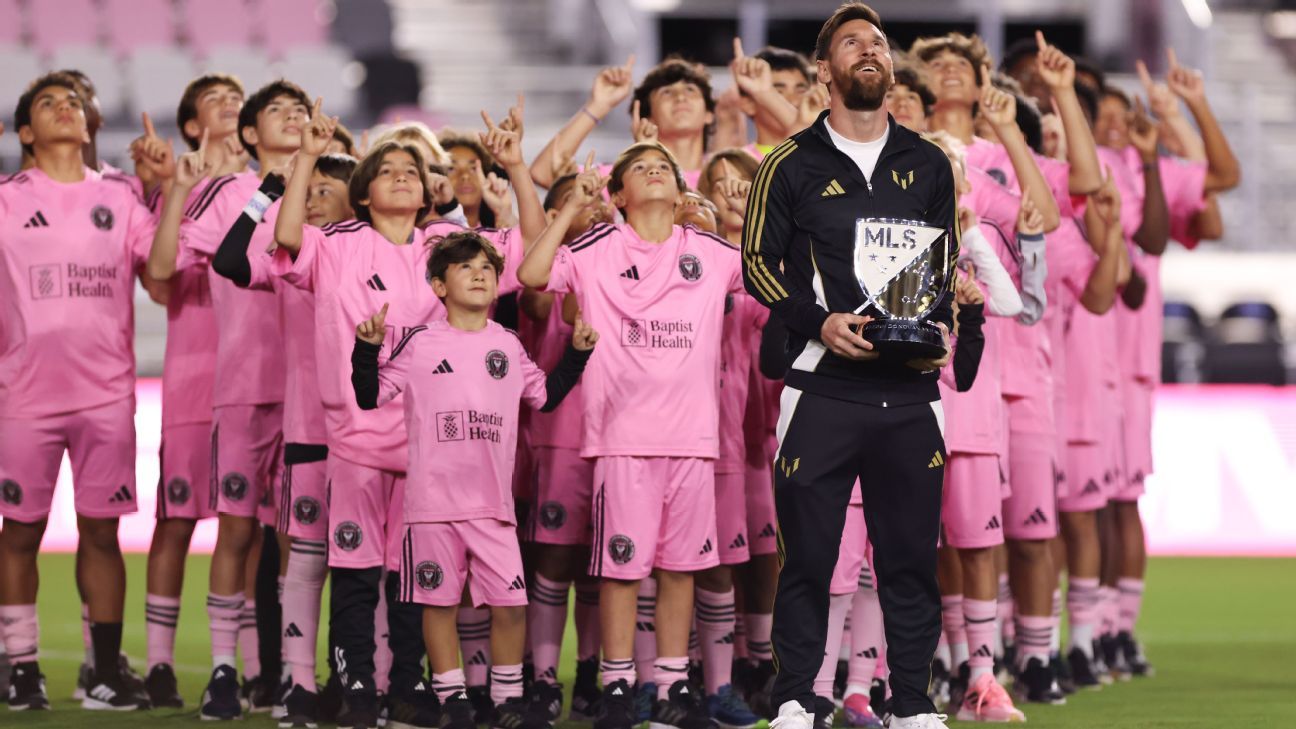
Photo: ESPN.com
Lionel Messi has announced the second edition of the Messi Cup, which will take place between 25 October and 1 November in South Florida at Inter Miami's stadium. The under-16 tournament has doubled the number of participants: rising from 8 clubs in 2024 to 16 in 2025, consolidating itself as an international laboratory for talent detection.
What happened
The second edition of the Messi Cup brings together 16 youth teams invited from five continents. The competition is organised by 525 Rosario, a sports events producer linked to Messi, and maintains its focus on the under-16 category. Among the clubs present are Barcelona, Ajax, Inter Milan, Atlético Madrid, Benfica, Palmeiras, Arsenal, Manchester City, Chelsea, Boca Juniors, River Plate and Flamengo, along with other institutions.
The tournament held its first edition in 2024 with eight participating teams. The doubling of invitations marks significant expansion in just one year. The event will run for eight consecutive days, with teams competing at the South Florida complex.
Messi emphasises the educational purpose of the initiative. "The Messi Cup was created to give young players a unique experience, both on and off the pitch, during a crucial stage of their development, and to introduce them to what it means to compete at the highest international level," said the former footballer.
The numbers
The growth is substantial: a 100% increase in participation. In 2024, eight clubs accepted the invitation; in 2025, there are 16. Tim Pastore, one of the project's executives, highlighted the significance of the leap. "Going from eight to 16 clubs in our second year marks a significant milestone for the Messi Cup," he said.
The geographical distribution reflects global ambition. The Americas have strong representation, with clubs from six different countries. Europe is represented through Barcelona, Ajax, Inter Milan, Atlético Madrid, Benfica, Arsenal, Manchester City and Chelsea. The eight-day duration allows for a dense competitive calendar, essential for assessing performance under continuous pressure.
The age category is strategic: under-16 corresponds to a critical window of development, where decisions by academies and technical structures begin to shape future professional trajectories.
Why this matters
The Messi Cup does not function as a traditional talent search. It functions as a laboratory where personal brand, access to international infrastructure and competitive credibility combine to attract not just talent, but elite clubs. Barcelona, Arsenal, Manchester City and Chelsea do not send youth teams out of convenience: they use the tournament as an instrument for long-term scouting and institutional promotion.
The model replicates strategies from elite international tournaments, but with a differentiator: it is anchored in Messi's reputation and managed by a dedicated professional structure. The 525 Rosario producer enables scalability and continuity, transforming the event into a repeatable and expandable brand asset.
For players, participating means exposure to international standards of excellence during a period when tactical flexibility is at its peak. For clubs, it means access to genuine prospecting in a single location over eight days.
What comes next
If the doubling continues as a growth standard, the third edition could involve 32 clubs. But there are implicit tensions: growth by invitation depends on selectivity. Accelerated expansion due to commercial or political pressures dilutes the competitive edge that attracts major institutions.
The suggested schedule leaves room for format evolution: more stages, more days, geographical distribution of events. South Florida, already a centre of Messi's investment through Inter Miami, consolidates itself as an emerging hub for international football outside traditional European poles.
The success of the second edition will be measured not just by the number of participants, but by club retention and the subsequent trajectory of players identified during the tournament.
Rewritten from a story published by ESPN.com. View original article ↗
AI-assisted translation of the original article in Portuguese. Read in Portuguese